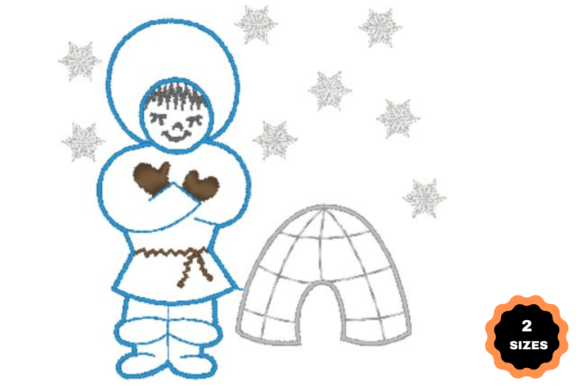
Eskimo Embroidery Design Review
As an embroidery designer with years of experience in crafting and selling handmade products, I’ve learned that the right design can make or break a craft fair booth. The Eskimo embroidery design is one that catches the eye immediately, offering a charming, whimsical vibe that feels both nostalgic and modern. It’s perfect for winter-themed items, but its appeal goes beyond seasonal trends.
First Impressions: A Cute and Versatile Design
The Eskimo design exudes a soft, friendly energy. It’s not overly complex, which makes it accessible for a wide range of crafters. Whether you're creating a handmade product for a winter market or a craft fair product, this design has the potential to stand out. Its simplicity allows it to be both decorative and functional, making it ideal for items like tote bag design, apron embroidery, and tea towel embroidery.
Visually, it feels like something that could fit into a farmhouse aesthetic or a more modern, minimalist space. The design isn’t too bold, but it’s distinct enough to catch attention at a glance. This makes it a strong candidate for embroidered patch applications or as a focal point on a pillow cover.
Performance on Different Products
One of the key strengths of the Eskimo design is its versatility. It works well on a variety of materials and item types. For example:
- Tote bags – The design adds a nice touch without overwhelming the fabric. It looks great on light-colored cotton or canvas.
- Aprons – As an apron embroidery, it’s subtle yet noticeable, especially when paired with contrasting thread colors.
- Tea towels – The design stands out on textured fabrics, making it a great choice for kitchen accessories.
- Caps – On curved surfaces, the design may require some adjustment, but it still holds up well.
- Fabric pouches – As a small accent, it adds personality without being too busy.
This design also works well as a printable mockup for online listings, helping Etsy sellers showcase their small shop product before production.
Practical Selling and Production Considerations
When evaluating a machine embroidery design, practicality is key. The Eskimo design is easy to understand at a glance, which is important for customers browsing through a booth. It can be used as a small accent or scaled up for a larger focal point, depending on the product.
Photographing this design for online listings is straightforward. The contrast between the stitches and the fabric can create a striking image, especially when using bold thread colors. However, it's important to test the design on different fabric textures to ensure clarity.
In terms of batch production, the Eskimo design should be repeatable, provided the stitch density is consistent. It’s advisable to check the hoop size and confirm that it fits within your machine’s capabilities. Using the right stabilizer is crucial, especially when working with thick or textured fabrics.
Careful-Use Notes for Crafters
While the Eskimo design is generally user-friendly, there are a few things to keep in mind:
- Dense stitch areas – These may cause the fabric to pucker if not properly stabilized.
- Tiny details – If the design includes fine lines or small elements, they may not show up clearly on certain fabrics.
- Small lettering – If the design includes text, ensure it’s large enough to read at the intended scale.
- Thick fabric – Heavier materials may require additional stabilizer or a different hoop setup.
- Dark fabric – Thread color choices matter here; lighter threads may not show up well.
- Curved cap surfaces – The design may need slight adjustments to fit properly on rounded areas.
It’s also worth noting that the design might lose clarity at smaller sizes, so consider how it will appear on different product types.
Impact on Visual Appeal and Customer Engagement
The Eskimo design adds visual interest to any product it’s applied to. In a craft fair booth, it can help draw attention to your display, especially when used on items like market bags or handmade gifts. Its charm makes it relatable, which can lead to higher customer engagement.
From a brand consistency perspective, this design can serve as a signature element that ties together multiple product lines. It also enhances the handmade quality of your offerings, reinforcing the value of your finished product.
Embroidery Designer Notes for Success
Before finalizing the Eskimo design for your booth or online store, here are a few steps to take:
- Test the design on scrap fabric to see how it looks in real life.
- Check thread contrast against the fabric color to ensure visibility.
- Review spacing and layout to avoid overcrowding or distortion.
- Confirm hoop size compatibility with your embroidery machine.
- Inspect stitch density to prevent puckering or uneven stitching.
- Use the right stabilizer for the fabric type.
- Create at least one real mockup to visualize the final product.
- Compare fabric colors to ensure the design looks good on all options.
- Confirm commercial licensing before selling finished products.
By following these steps, you’ll be better equipped to turn the Eskimo design into a successful commercial embroidery product that resonates with your audience.